

1Kilimanjaro Christian Medical University College, Kilimanjaro, Tanzania.
2Department of Orthopedics and Traumatology, Kilimanjaro Christian Medical Centre, Kilimanjaro, Tanzania.
3Sumbawanga Regional Referral Hospital, Rukwa, Tanzania.
Department of Orthopedic and Traumatology Surgery, P.O. Box 3010, Moshi, Tanzania.
Email: bomari96@gmail.com
Received : July 20, 2025,
Accepted : August 20, 2025
Published : August 29, 2025,
Archived : www.jclinmedcasereports.com
Background: The rise in population life expectancy has resulted in an increase in intertrochanteric fractures, as aging tends to be associated with osteoporosis, which is a risk factor for fractures. Screw cut-out was the commonest mechanical complication observed post-proximal femoral nailing at KCMC at the rate of 18.5%; however, there is a scarcity of literature on factors associated with screw cutout in our setting.
Objectives: To determine whether TAD, quality of reduction, and position of the lag screw within the head of the femur were associated screw cutout in Intertrochanteric fractures treated with PFN at KCMC from March 2020 to May 2024.
Methodology: A cross-sectional study was conducted whereby hip radiographs of patients with femoral intertrochanteric fractures were reviewed pre-operative, immediately after fixation and 12 weeks post PFN fixation.
Primary outcome: Screw cutout
Results: 113 hips met the inclusion criteria, while 17 hips experienced screw cutout (15.04%). The mean TAD was 33.54 (16.51) for those without cutout group and 55.14 (22.36) for those with cutout, and the difference was statistically significant p<0.001. The finest minimum TAD for screw cutout was 35.8mm, with a sensitivity of 82.4% and 1-specificity of 38.5%. Poor reduction, and Suboptimal position of the lag screw were significantly associated with screw cutouts in univariate (p<0.001, p<0.001, respectively) and in multivariate analysis, p=0.004 and p=0.008 respectively.
Conclusion: Poor reduction and Suboptimal position of the lag screw were associated with screw cutout, and the estimated optimal minimum TAD for cutout was <35.8 mm. In order to reduce risk of screw cutout, we would recommend achieving good reduction, positioning the lag screw in optimal zones, and maintaining TAD <35.8 mm during PFN fixation.
Keywords: Screw cutout; Intertrochanteric fractures; Proximal femoral nail; KCMC.
Abbreviations: AO/OTA: Arbeitsgemeinschaft für osteosynthesefragen / orthopaedic and traumatology association; BRQC: Baumgaertner Reduction Quality Criteria; IMN: Intramedullary Nail; KCMC: Kilimanjaro Christian Medical Centre; KCMUCo: Kilimanjaro Christian Medical University College; ORIF: Open Reduction and Internal Fixation; PFN: Proximal Femoral Nail; TAD: Tip Apex Distance.
Copy right Statement: Content published in the journal follows Creative Commons Attribution License (http://creativecommons.org/licenses/by/4.0). © Mhando BO (2025)
Journal: Open Journal of Clinical and Medical Case Reports is an international, open access, peer reviewed Journal mainly focused exclusively on the medical and clinical case reports.
More than half of hip fractures are Intertrochanteric fractures and are usually observed in elderly individuals, and the risk is higher for females than males [1,2].
These fractures result into high morbidity and mortality among the elderly and tend to impose a huge economic burden on the healthcare systems and individuals as well [3,4].
Unstable intertrochanteric fractures are usually treated operatively and PFN has shown to provide more mechanical stability and favorable biological fixation (Gadegone and Salphale, 2007) (Seo et al., 2016). However, complications such as screw cutout can arise after PFN fixation, and parameters such as TAD, Quality of reduction and Cleveland zones can be used to predict the risk of screw cutout [5-8].
The Prevalence of screw cutout among patients with intertrochanteric fractures was 5.1% in Italy, in India and Tanzania, the prevalence was 6.7% and 18.5%, respectively [9-11]. To the best of our knowledge there is a scarcity of literature regarding factors associated with screw cutout in our locality. Therefore, this cross-sectional study aimed in evaluating whether the quality of reduction, TAD and Cleveland zones are associated with screw cutout.
This study will assist not only in understanding factors associated with screw cutout post-PFN fixation so as to improve intraoperative fixation but also in the formulation of follow-up policy in order to improve the well-being of post-PFN candidates. The study will also function as background for future research regarding fracture of intertrochanteric fractures of the femur.
Study design and setting
A cross-sectional study was conducted at Kilimanjaro Christian Medical Centre (KCMC), whereby we reviewed all hip radiographs of patients with intertrochanteric fractures treated with PFN from March 2020 to January 2024.
Kilimanjaro Christian Medical Centre (KCMC), is a zonal referral hospital located in Kilimanjaro region, Tanzania with capacity of 630beds and it is also a teaching hospital.
Eligibility criteria
All isolated femoral intertrochanteric fractures which were treated with a standard PFN (240 mm IMN having CCD angle 125°/130°/135° with a proximal diameter of 17.0 mm, distal diameter of 10 to12 mm, and there are two hip screws (one is for compression effect and the other one is for rotation stability), distally the construct is supported with two cortical screws) and whose their preoperative, immediately postoperative, and three months postoperative radiographic images were available in the imaging collection systems used by KCMC. Hip radiographs of poor quality which were difficult to interpret, Atraumatic pathological femoral intertrochanteric fractures and those which required revision surgery were excluded.
Study variables
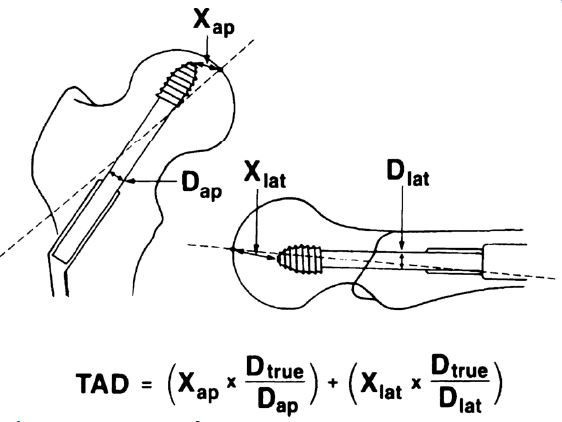
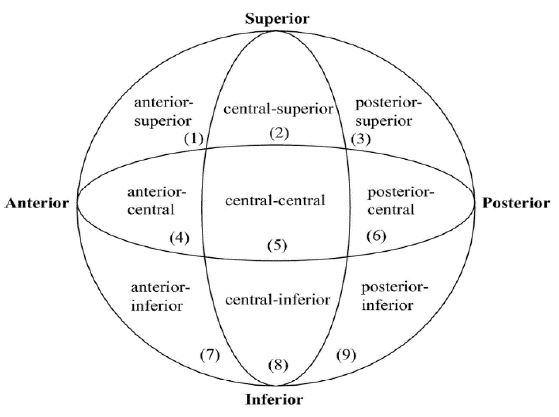
The independent variables were age, sex, side of the fracture, intertrochanteric fracture classification by AO/OTA; type 31-A1 is the pertrochanteric simple two-parts with intact lateral cortex, type 31-A2 is the intertrochanteric fracture with separate posteromedial fragment with intact lateral cortex, and type 31-A3 refers to the intertrochanteric fracture involving both medial and lateral cortices. Other independent variables were quality of reduction, TAD, and Cleveland zones. Quality of reduction was assessed using Baumgaertner reduction quality criteria whereby the fracture reductions were classified into Good, acceptable and poor Table 1 [6], TAD was obtained as the sum of distances from the tip of the lag screw to the apex of the femoral head measured on an anterior-posterior view (Xap) and lateral view (Xlat) (Figure 1), TAD of 25 mm is traditionally considered as the best cutoff value for predicting screw cutout [6]. And Cleveland zones were used to determine the position of the lag screw within the head of the femur whereby on the lateral hip radiograph, the head of the femur is cleaved into nine zones which are used to identify the position of the lag screws within the head of the femur, and zone 8 and 5 are considered as optimal zones and the rest of the zones are considered as suboptimal zones (Figure 2) [5].
| Criteria |
|---|
| I. Alignment |
|
α) Anteroposterior view: normal or slight valgus neck-shaft angle* β) Lateral view: less than 20° of angulation |
| II. Displacement |
|
α) Anteroposterior view: less than 4 mm of displacement of any fragments. β) Less than 4 mm of displacement of any fragments |
| Reduction quality |
|
Good: both criteria met Acceptable: only one criterion met Poor: neither criterion was met |
*Slight valgus means a valgus of no more than 10°.
The dependent variable was Screw Cutout (Yes or No cutout). Screw cutout refers to the collapse of neck-shaft angle into varus leading to extrusion of the lag screw out of the femoral head [6].
Data collection procedure
Using a data collection tool hip radiograph of patients with femoral intertrochanteric fractures postoperative treated with PFN were recruited into the study and their data were extracted from hospital registry books (hospital registration number, age, and sex) and from image collection systems (the classification of intertrochanteric fracture preoperatively and their radiological assessments immediately post PFN fixation, and after 3months post-operative were conducted).
Statistical methods
The collected data were entered and analyzed according to the objectives using SPSS version 20.
o Continuous variables- Mean (Standard deviation), t-test for independent samples.
o Categorical variables - frequencies, proportions, Chi-square test,
o p< 0.05 were considered statistically significant.
Binary logistic regression analysis was performed for variables that were found significant in univariate analysis, and the results were tabulated.
Enrollment of the study participants
From the hospital registry books, we obtained 184 hip radiographs with femoral intertrochanteric fractures while 152 hips were operated and 32 hips were not operated. Among the operated cases, 1case had contralateral hip fractures, 2 hips had ipsilateral femur shaft fractures, 1 hip experienced lateral screw migrations, 2 Z-effect and 6 revision surgeries, and 27 hips had missing information from hospital registry books or image collection systems. Finally, 113 hips were eligible to be enrolled in the study. Out of 113 hips, only 17 hips experienced screw cutout, and 96 hips had no screw cutout. Hence, the prevalence of cutout was 15.04%.
Demographic characteristics
Age, gender, fracture side and fracture types had no significant differences to screw cutout Table 2.
| Characteristics | Without cutout | With cutout | Chi-square (χ²) | p-value |
|---|---|---|---|---|
| Age (years) | ||||
| ≤40 | 11 (78.6%) | 3 (21.4%) | 4.556 | 0.160 |
| 41–60 | 17 (100%) | 0 (0%) | ||
| 61–80 | 47 (85.5%) | 8 (14.5%) | ||
| 81+ | 21 (77.8%) | 6 (22.2%) | ||
| Gender | ||||
| Male | 54 (81.8%) | 12 (18.2%) | 1.222 | 0.269 |
| Female | 42 (89.4%) | 5 (10.6%) | ||
| Fracture side | ||||
| Right | 52 (86.7%) | 8 (13.3%) | 0.293 | 0.588 |
| Left | 44 (83.0%) | 9 (17.0%) | ||
| AO/OTA fracture Classification | ||||
| 31-A1 | 10 (83.3%) | 2 (16.7%) | 2.598 | 0.315 |
| 31-A2 | 64 (82.1%) | 14 (17.9%) | ||
| 31-A3 | 14 (17.9%) | 1 (4.3%) | ||
Quality of reduction, TAD, and Cleveland zones against screw cutout
Those with poor reduction had 13.45 times significantly higher odds of screw cutout than those with good reduction, and suboptimal position of the lag screw had 10.573 times significantly higher odds of screw cutout, moreover, the odds of screw cutout were statistically significantly increased by 5.5% for every increase of 1mm of TAD (Table 3).
| Characteristics | Without cutout | With cutout | Chi-square (χ²) | p-value | OR | 95% CI | P-value |
|---|---|---|---|---|---|---|---|
| Quality of reduction | |||||||
| Good | 66 (93.0%) | 5 (7.0%) | 1 | ||||
| Acceptable | 25 (86.2%) | 4 (13.8%) | |||||
| Poor | 5 (38.5%) | 8 (61.5%) | 25.580 | <0.0001 | 13.45 | 2.28–79.16 | 0.004 |
| TAD (mm) | 33.54 (16.51) | 55.14 (22.36) | -4.699 | <0.001 | 1.055 | 1.006–1.107 | 0.027 |
| Cleveland zones | |||||||
| Optimal | 59 (96.7%) | 2 (3.3%) | 1 | ||||
| Suboptimal | 37 (71.2%) | 15 (28.8%) | 14.357 | 0.0001 | 10.573 | 1.83–61.12 | 0.008 |
TAD – receiver operating characteristic (ROC) curve
Area under the curve: The ROC curve model was found to be significant for determining the cutoff value of TAD for screw cutout with AUC 0.779 with 95% CI 0.647 TO 0.910, p=0.0003 and that is, the model was able to explain the values correctly by 77.9% with standard error of 6.7% (Table 4).
Coordinates of the receiver operating characteristic curve: 35.8 mm was the best minimum value of TAD. the probability of screw cutout was correctly predicted 82.4% of the times and the probability of no screw cutout was incorrectly predicted 38.5% of the times (Table 5).
| 95% CI | ||||
|---|---|---|---|---|
| Area | Standard Error | P-value | Lower bound | Upper bound |
| 0.779 | 0.067 | 0.0003 | 0.647 | 0.910 |
| Positive if >= | Sensitivity | 1-Specificity |
|---|---|---|
| 35.8 | 0.824 | 0.385 |
It was seen that the probability of encountering screw cutout is dependent on the successfulness of fracture fixation, and that is why the demographic characteristics were not associated with cutouts, and this was also noted in previous literature [3-15].
Both our study and a previous study that was done in Italy, identified that poor reduction was associated with screw cutouts [16]. Poor reduction was also found to be significant for lag screw cutout in another study that was done in Singapore the similarity could be attributed to using a similar method of assessment of the quality of reduction and in both studies the commonest fracture type was 31A2 which are unstable fracture [14].
Similar findings as to our study were observed in India, in which the odds of screw cutout were 24 times higher with 95% CI (1.068-539.107) in patients with poor reduction, but lateral views radiographs were not used for assessing reduction quality which might explain the reason for the wider confidence interval [17].
Our findings are in contrast to a previous study that was done in Canada, whereby quality of reduction was not significant for screw cutout, this may be because in Canada, patients with subtrochanteric fractures were also included, and subtrochanteric fractures may act as shaft fracture and hence providing more stability, unlikely to current study whereby patients with subtrochanteric fractures were excluded [7].
In Bari, Italy, the quality of reduction was not a significant factor for implant cutout p=0.082; the indifference in comparison to our study may be because they had few patients with screw cutout 5.1% while we found more cases of screw cutout 15.0% [11].
The minimum TAD for screw cutout in our study was 35.8mm which is almost 10mm higher than the cutoff TAD found in other studies, and this discrepancy may be because some locations, such as posterior inferior, tend to raise the TAD, but it has the advantage of stabilizing the calcar and hence lowering the risk of cutout [6,18,9,17]. Others have found 19.9 mm to be the best threshold for preventing screw cutout, therefore this supports the argument that TAD should be adjusted according to the femoral size head, but they have not described how [13,19].
Also, our minimum TAD (35.8 mm) for screw cutout is almost similar to the other TAD (34.8 mm) estimated in the past study, and so this may indicate that; for TAD at 25 mm as an upper limit to be the best minimum for predicting cutout other predictors are needed to play part too [20].
Different findings were also observed in a study carried out in Canada whereby there was no statistical significance difference in screw cutout among different categories of lag screw position and this may be contributed by the fact that in that study, they had included even patients with subtrochanteric fractures of which these fractures tend to behave differently biomechanically [7].
Suboptimal lag screw positions were found ten times more likely to cause screw cutout as per current, and also, as a per study performed in the Netherlands, optimal lag screw positions were seen to be preventive against cutouts, also, in that study, the suboptimal screw positions had not significant risk to cutout, and therefore, this variation can be because they analyzed each Cleveland zone separately [13].
Positioning the lag screw at a suboptimal zone was found to be a significant risk for cutout even in multivariate analysis, according to our study, but according to a study conducted in India, suboptimal lag screw position was only significant in univariate analysis, the reason may be because we had three times more cutouts and more samples than them which may yield different results upon analysis [17].
As per current study, more cutouts occurred in suboptimal screw locations and suboptimal positions were seen to be significantly associated with cutout. However this differs from a study done in Singapore whereby it was found that there were no significant differences in screw cutouts between those with optimal screw position and those with suboptimal screw position; the difference could be due to the fact that they did measurements of parameters intraoperatively and proportion of cutout was higher in current study 15% compared to 6.7% in the previous study which may cause to give different results upon analysis [9]. We have hypothesized that may be our patients do early weight bearing even if their fixation is at risk of cutout.
Strengths: Standard technique for measurement of predictors of screw cutout were used and to minimize measurement errors by different individuals, only the principle investigator was the one doing that task.
Limitation: There were some missing postoperative information hip radiographs. This could be due to death, inability to attend follow-up clinics because of financial constraints, or medical comorbidities.
Poor reduction and suboptimal positioning of the lag screw within the head of the femur were associated with screw cutouts. TAD of 35.8 mm was estimated to be the best cutoff value for screw cutout.
Recommendations
During Osteosynthesis of the intertrochanteric fractures, surgeons should make sure to get a good reduction, position the lag screw within the optimal zones, and keep TAD of <35.8 mm in order to reduce the risks of screw cutout, but TAD <25 mm is advocated.
There are still different schools of thought regarding the best upper limit of TAD value and therefore, we encourage further research to be conducted on this issue.
Large prospective cohort studies are needed in our setting in order to investigate the association of screw cutout and other factors such as postoperative weight-bearing habits, bone quality, open/closed reduction, and Calcar TAD for more accurate results.
Patients who are at risk of screw cutout should be monitored closely at our orthopedic and trauma clinics in order to detect the complication as early as possible.
Acknowledgement: I would like to thank very much my supervisor Dr. Regnald Shoo and co-supervisor Dr. Rogers Temu for their tireless and priceless support they have given me.
I would like to show my deep appreciation to the KCMC Orthopaedic, Radiology department and all its staff for their support during the development of the proposal and data collection.
To my fellow Orthopaedic residents, thanks very much for your constructive inputs whenever I consulted you and I appreciate your contributions during the research report presentation in the department.
Authors contributions: BOM: He developed the research title, proposal writing, data collection and analysis as well as manuscript writing for publication. RT and RS were the main supervisors who oversaw this research work in every step. HM, PM, GK, OS, EM, FNM were consulted for their expert contributions in this research work.
Competing interest: The authors declared no conflict of interest.
Ethical approval: Permission to conduct the study was sought from the KCMUCo Ethical Committee (No. PG 78/2023), KCMC Hospital administration, KCMC Orthopedic Department, and KCMC Radiology Department. Only the Principal Investigator and co-authors had access to the research database.
Data availability statement: Data for this study can be accessible upon valid request.